
Assessing the Valuation Imbalance of Criminal Personalities
DOI:
https://doi.org/10.67945/jfa.v8i.137Keywords:
criminal psychology, personality assessment, Hartman Value Profile, forensic psychologyAbstract
Can axiological testing distinguish between unprincipled individuals and others who are guided by morality? Only empirical scientific research can answer this beyond speculation. As socially acknowledged, felons or criminals are good examples of unprincipled, unethical, and unscrupulous individuals. This article summarizes results from over four years of testing in two separate studies, one comparing over three hundred probationers with non-felons, another comparing over seven hundred prison inmates with non-felons, within Tennessee state prisons. Both studies confirm that value testing can distinguish criminal from non-criminal personalities, that is, unprincipled and unethical from ethical individuals. Various sub-groups within the sampling were compared: male, female, and African-American offenders. None of these sub-groups were found to be different at a statistically significant level. Evidence gathered by value testing criminals strongly indicates that a complex combination of factors make up the labyrinthine-structure consciousness of unethical antisocial individuals. Among the various factors discovered to be dominant among the felons profiled are: a negative attitude, a lack of self-discipline, a tendency to break rules, a rigid self- image, and a lack of empathy combined with an exploitive orientation. All of these increase the probability of antisocial or criminal behaviors given the proper circumstances.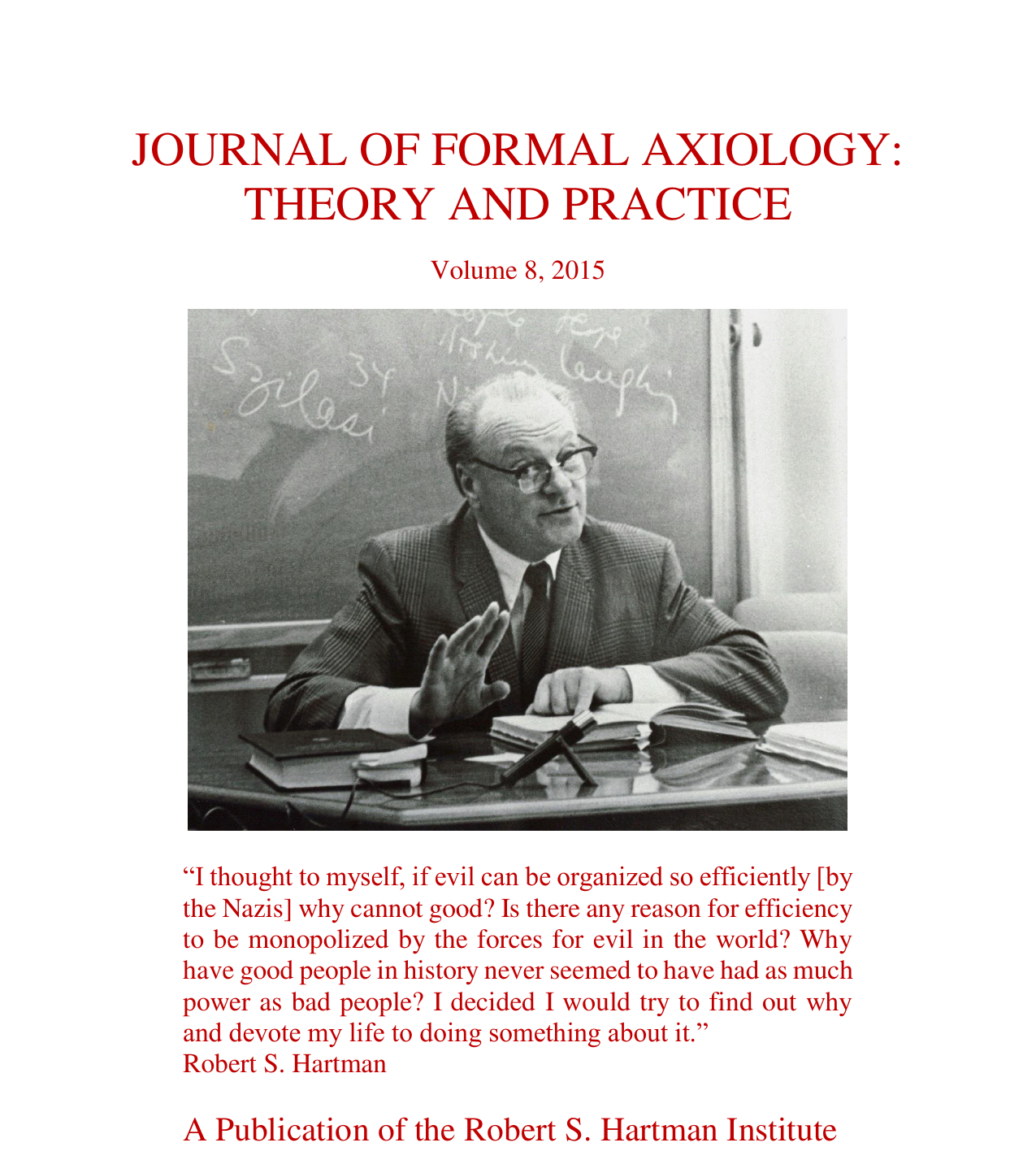
Published
2015-07-01
How to Cite
Acquaviva, G. J. (2015). Assessing the Valuation Imbalance of Criminal Personalities. Journal of Formal Axiology: Theory and Practice, 8, 119–130. https://doi.org/10.67945/jfa.v8i.137
Issue
Section
Discussions
License
All rights reserved. No part of this publication may be reproduced, distributed, or transmitted in any form without prior written permission from the Robert S. Hartman Institute, except as permitted by law.
