
The Ends of Civilization
Robert S. Hartman and the "Whole Man" at Cold War MIT
DOI:
https://doi.org/10.67945/jfa.v11i.159Keywords:
Cold War, MIT, history of philosophy, Robert S. Hartman, moral philosophy educationAbstract
Longstanding concerns about the dehumanizing effects of science and technology took on a more sinister hue and added urgency in the aftermath of World War II. As if the death and destruction wrought by conventional weapons were not enough, the advent of the atomic bomb caused an existential crisis. Humanity had to close the gap between its technological prowess and spiritual poverty or self-destruct. Concern about the growing rift between head and heart in science and engineering education at postwar MIT, a school closely allied with the US military, prompted its leaders to emphasize their commitment to educating “whole men.” To help fulfill that promise, MIT enlisted the services of Robert S. Hartman, a professor of moral philosophy at Ohio State University and expert in axiology. Hartman served as both a professor of moral philosophy and “values consultant” to MIT’s Dean of Students, E. Francis Bowditch, a friend and former colleague at Lake Forest Academy, who obtained the grant from the Ford Foundation that funded one of the most unusual—and little known—social science experiments of the Cold War. Hartman delivered the goods, perhaps too well—a result that illuminated both the possibilities and limits of reform imposed by Cold War constraints.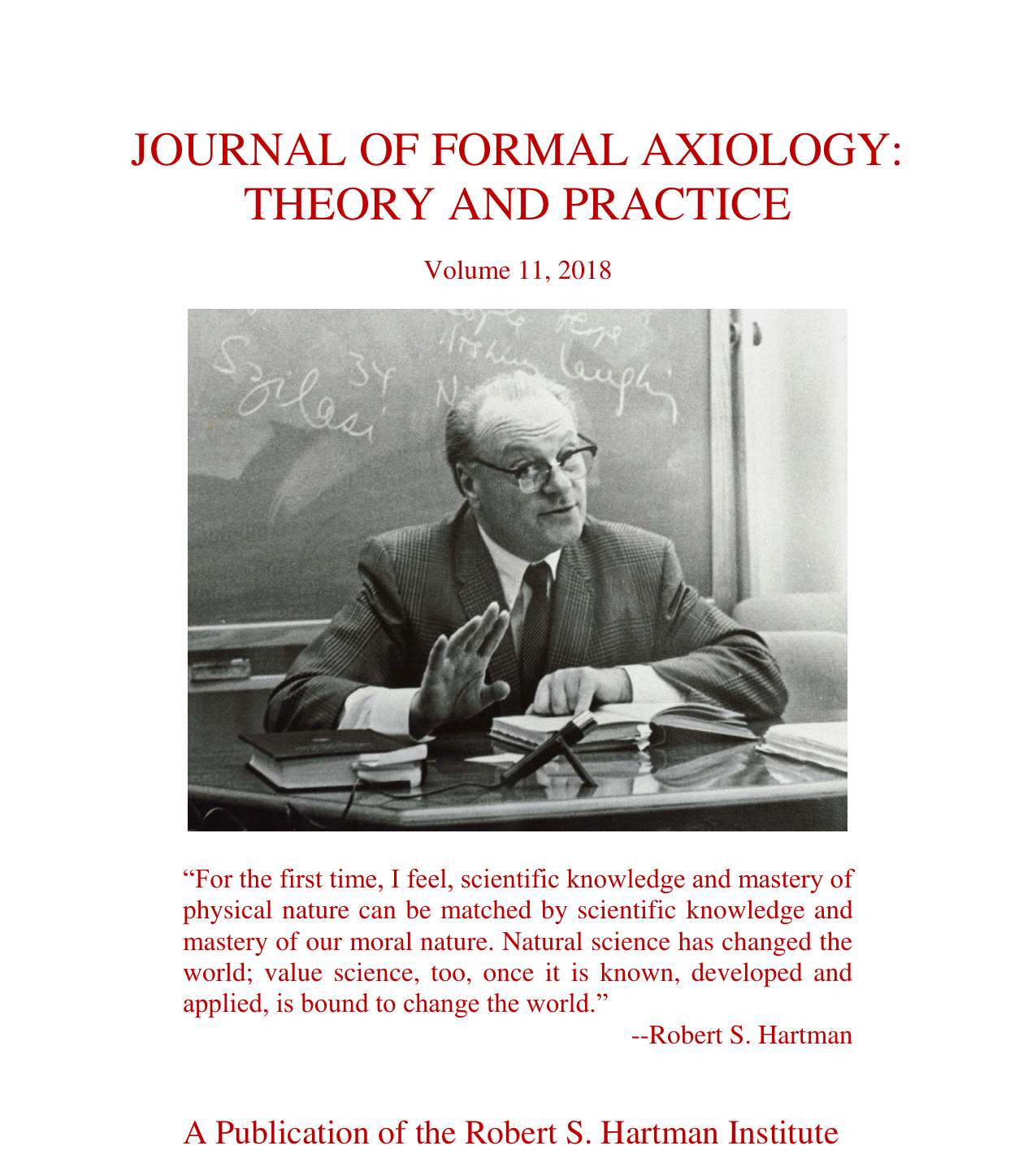
Published
2018-07-01
How to Cite
Kizilos-Clift, P. (2018). The Ends of Civilization: Robert S. Hartman and the "Whole Man" at Cold War MIT. Journal of Formal Axiology: Theory and Practice, 11, 25–48. https://doi.org/10.67945/jfa.v11i.159
Issue
Section
Articles
License
All rights reserved. No part of this publication may be reproduced, distributed, or transmitted in any form without prior written permission from the Robert S. Hartman Institute, except as permitted by law.
